
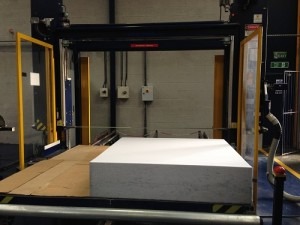
Acoustic foam plays a vital role in improving sound quality, reducing unwanted noise, and enhancing comfort across a wide range of environments. However, the performance of foam depends not only on the material itself but also on how it is processed for its intended application. This is where Foam conversion becomes essential.
A professional Foam converter transforms standard foam sheets into precision-engineered products designed for specific acoustic, thermal, and protective purposes. Whether the requirement is for industrial machinery, construction, transportation, marine applications, or commercial interiors, modern foam conversion techniques allow manufacturers to produce highly customised solutions that deliver exceptional performance.
This article explores the complete process of acoustic foam conversion, the manufacturing methods involved, available foam materials, industry applications, and the many benefits of choosing professionally converted foam products.
What Is Acoustic Foam Conversion?
Foam conversion is the process of transforming raw foam materials into finished components that meet exact design and performance requirements. Instead of using standard foam sheets, a skilled Foam converter cuts, shapes, laminates, profiles, or fabricates foam into products that fit perfectly within a customer’s project.
The conversion process allows manufacturers to produce components with precise dimensions, specialised surface profiles, multiple bonded layers, adhesive backings, protective coatings, or complex three-dimensional shapes.
Rather than offering a one-size-fits-all solution, foam conversion creates products specifically engineered for their intended environment.
Why Foam Conversion Matters
Every application has different acoustic, thermal, and structural requirements. A construction project may require sound absorption behind wall panels, while heavy industrial equipment needs vibration reduction and heat resistance.
Professional Foam conversion provides solutions that standard foam simply cannot achieve. It allows products to be designed for:
- Improved sound absorption
- Better thermal insulation
- Enhanced vibration control
- Lightweight construction
- Accurate fitting
- Increased durability
- Easier installation
This flexibility makes converted foam an essential material across many industries.
Modern Foam Conversion Manufacturing Processes
An experienced Foam converter uses advanced machinery to manufacture products with exceptional precision and consistency. Various processing techniques are selected depending on the required design.
CNC Profiling
Computer-controlled profiling machines accurately shape foam into complex three-dimensional patterns. CNC technology is ideal for bespoke acoustic panels and engineered insulation products where precision is critical.
Precision Slitting
Large foam blocks can be slit into thinner sheets of consistent thickness. This process produces uniform materials suitable for insulation, lining systems, and acoustic treatments.
Band Saw Cutting
Band saw equipment enables accurate straight cutting for foam sheets, blocks, and customised dimensions while maintaining smooth edges.
Water Jet Cutting
High-pressure water jets create intricate shapes without damaging the foam structure. This method is perfect for complex industrial components and detailed designs.
Die Cutting
Die cutting produces large quantities of identical foam parts with excellent accuracy, making it ideal for automotive, medical, packaging, and manufacturing industries.
Laminating
Multiple foam layers or additional facing materials can be bonded together to improve strength, insulation, fire resistance, or sound performance.
Spray Coating
Protective coatings can be applied to improve durability, moisture resistance, or provide specialised surface finishes for demanding environments.
Types of Foam Used in Foam Conversion
Different materials offer unique advantages depending on the application.
Polyurethane Foam
Polyurethane foam is one of the most versatile materials used during Foam conversion. It provides excellent acoustic absorption while remaining lightweight and flexible.
Common applications include:
- Acoustic panels
- Furniture cushioning
- Packaging
- Vehicle interiors
- Thermal insulation
Polyethylene Foam
Polyethylene foam is known for its durability, moisture resistance, and shock-absorbing qualities.
Typical uses include:
- Protective packaging
- Construction insulation
- Impact protection
- Sports equipment
- Industrial padding
Polystyrene Foam
Polystyrene foam provides outstanding thermal insulation while remaining lightweight.
It is frequently used for:
- Building insulation
- Temperature-sensitive packaging
- Protective inserts
- Disposable packaging solutions
Class 0 Acoustic Foam
One of the most specialised products created through Foam conversion is Class 0 acoustic foam.
This fire-resistant polyurethane foam is chemically treated to achieve extremely high fire performance while maintaining outstanding sound absorption characteristics.
Its flexibility allows installation on flat, curved, or irregular surfaces, making it suitable for demanding industrial environments.
Benefits of Class 0 Acoustic Foam
Class 0 foam offers several important advantages:
- Excellent fire resistance
- High acoustic absorption
- Non-toxic composition
- Flexible installation
- Lightweight handling
- Easy cutting and fabrication
- Non-fibrous material
- Does not erode during airflow
- Available with self-adhesive backing
- CFC and HCFC free
Additional facing materials, polymer barriers, lead foil, PVC coatings, or damping sheets can also be incorporated depending on the application.
Industries That Benefit from Foam Conversion
The versatility of Foam conversion allows one material to solve problems across numerous industries.
Construction
Modern buildings require effective acoustic insulation to create quieter living and working environments.
Converted acoustic foam is commonly installed in:
- Wall systems
- Ceiling panels
- Plant rooms
- Mechanical equipment
- HVAC systems
- Office partitions
The material also contributes to thermal insulation, helping improve energy efficiency.
Automotive
Vehicle manufacturers rely heavily on converted foam products to improve passenger comfort and reduce unwanted noise.
Applications include:
- Door panels
- Roof linings
- Engine compartments
- Headrests
- Armrests
- Cabin insulation
- Dashboard components
Acoustic foam significantly reduces vibration and road noise while enhancing interior comfort.
Marine
Marine environments demand materials capable of handling both moisture and high temperatures.
Converted foam products are frequently installed in:
- Engine rooms
- Generator enclosures
- Cabin walls
- Yacht insulation
- Sound barriers
These products improve comfort while reducing engine noise onboard.
Industrial Equipment
Factories and manufacturing facilities often require specialist acoustic solutions for noisy machinery.
Foam conversion supports:
- Machine enclosures
- Compressor rooms
- Generator housings
- Ventilation systems
- Industrial cabinets
Custom-designed foam components reduce noise levels while protecting surrounding workspaces.
Medical Sector
Healthcare environments require materials that provide comfort without compromising hygiene.
Converted foam products are widely used for:
- Orthopaedic supports
- Patient positioning
- Medical cushions
- Protective equipment
- Healthcare packaging
Packaging Industry
Precision-cut foam protects delicate products throughout transportation and storage.
Common examples include:
- Electronic packaging
- Aerospace equipment
- Medical devices
- Glass protection
- Precision engineering components
Custom foam inserts minimise movement and reduce damage during shipping.
Acoustic Foam for Sound Control
Many people assume acoustic foam completely blocks sound, but its primary function is to improve sound quality inside a room.
Acoustic foam works by absorbing reflected sound waves rather than allowing them to bounce around hard surfaces.
This reduces:
- Echo
- Reverberation
- Background reflections
- Speech distortion
The result is a cleaner, clearer acoustic environment.
Acoustic foam performs particularly well across mid- and high-frequency sound ranges. Lower frequencies may require additional specialist acoustic treatments for optimal performance.
Importance of Customisation
One of the greatest strengths of Foam conversion is complete design flexibility.
Every project presents different challenges, and a professional Foam converter can manufacture products according to exact customer specifications.
Customisation may include:
- Unique dimensions
- Bespoke profiles
- Multiple bonded layers
- Adhesive backing
- Fire-resistant materials
- Protective facings
- Decorative finishes
- Complex CNC-machined shapes
This ensures every component performs efficiently within its intended environment.
Quality Control in Foam Conversion
Precision manufacturing alone is not enough. Consistent quality control is equally important.
Professional foam conversion manufacturers inspect products throughout production to verify:
- Material consistency
- Dimensional accuracy
- Bonding strength
- Surface finish
- Acoustic performance
- Fire performance
- Customer specifications
Strict quality procedures ensure reliable products suitable for demanding commercial and industrial applications.
Environmental Considerations
Sustainability is becoming increasingly important within manufacturing.
Many modern Foam conversion processes now incorporate environmentally responsible practices, including:
- Recycled foam materials
- Efficient manufacturing methods
- Waste reduction
- Responsible material sourcing
- Long-lasting products that reduce replacement frequency
These initiatives help minimise environmental impact without compromising product performance.
Benefits of Professional Foam Conversion
Working with an experienced Foam converter offers numerous advantages beyond simply supplying foam materials.
Some of the key benefits include:
- Fully customised solutions
- Precision engineering
- Improved acoustic performance
- Enhanced thermal insulation
- Better vibration reduction
- Fire-resistant material options
- Cost-effective manufacturing
- Consistent product quality
- Faster installation
- Solutions suitable for virtually every industry
Professional expertise also ensures that every foam product is manufactured to meet exact operational requirements.
Conclusion
Acoustic foam has become an essential material for improving sound control, insulation, and comfort across countless industries. Through advanced Foam conversion, ordinary foam can be transformed into highly engineered products designed for demanding commercial, industrial, automotive, marine, medical, and construction applications.
A skilled Foam converter combines modern manufacturing technologies such as CNC profiling, water jet cutting, die cutting, laminating, and precision fabrication to produce solutions tailored to each customer’s exact needs. Whether the goal is reducing machinery noise, improving room acoustics, increasing thermal efficiency, or creating protective packaging, customised foam products deliver reliable and long-lasting performance.
As industries continue to demand higher efficiency, greater safety, and improved acoustic environments, professionally converted acoustic foam remains one of the most versatile and effective engineered material solutions available today.