
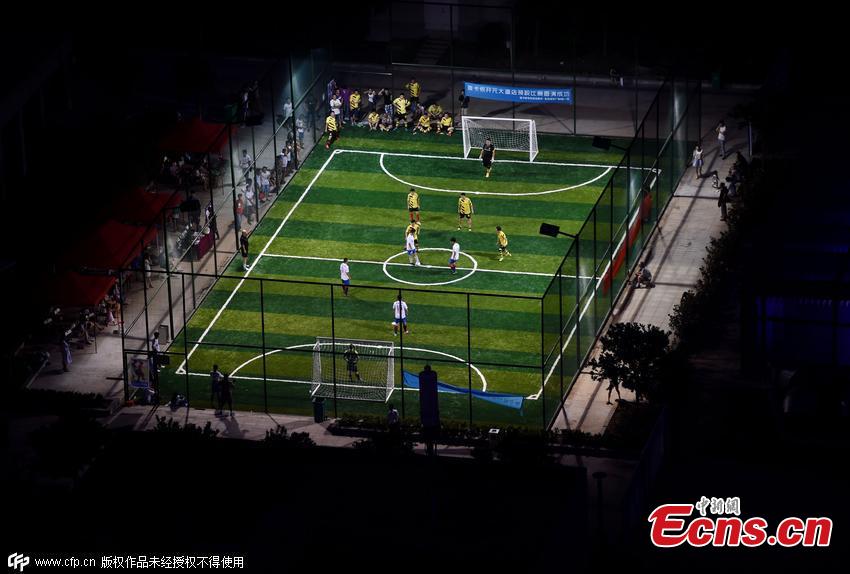
In a major tournament, some of the most intense “stadiums” are not in the host country at all. They are improvised viewing zones in city malls and cafés, where giant screens, rearranged seating, and improvised chants turn everyday spaces into mini‑arenas. For anyone who cares about structure, pressing, and momentum, these places offer a different way to read the same match: filtered through shared noise, shared angles, and the subtle pressure of watching in public instead of at home.
Why Public Indoor Spaces Are So Good for Live Match Focus
When a mall atrium or café decides to show a game properly—big screen, central placement, sound loud enough to cover background music—it quietly optimises the environment for attention. Unlike watching on a phone, you are forced into a single main angle, with fewer temptations to scroll away during slow spells. That makes it easier to follow the full arc of a game rather than only waking up for goals or VAR checks.
Shared silence in tense moments and collective noise during attacks also sharpen focus. In an ordinary café, people talk over everything; in a match café, conversations fall away when a team pushes their line higher, when a press starts to bite, or when a side is pinned back for several minutes. Those social cues pull your eyes back to the screen at precisely the phases when tactical patterns are taking shape—sustained pressure, structural fatigue, or the first signs that a coach is about to adjust.
How Mall Viewing Changes What You Notice During ดูบอลสด
Watching in a mall or café during ดูบอลสด subtly reorders what stands out. The sheer size of a central screen makes it easier to read spacing between lines, distances between defenders, and how wide or narrow a block actually is. At home on a smaller display, those details can blur; in a public setup, you can see the gaps where midfielders fail to close across or where a full‑back hesitates to step to the winger.
At the same time, the ambient noise of an indoor crowd pushes your attention toward certain events. A murmur runs through the space when a team holds a long spell of possession, when a press forces repeated clearances, or when a dangerous overload appears on the far side. That collective reaction acts as a second layer of commentary. If you listen carefully, you can use it as a guide to re-check what you just saw: Was that move really dangerous because of an individual dribble, or because a wider positional pattern had been building for several minutes?
Choosing the Right Public Screen for the Kind of Match You Want
Not every mall or café viewing area is equally useful for watching football with an analytical eye. Some are set up primarily for atmosphere—loud, packed, with standing room only—while others quietly prioritise sightlines and sound clarity. A little thought before you sit down can make a big difference to what you actually take from the game.
A practical way to choose is:
- Screen placement and size: Look first at whether the screen is central and large enough that you can clearly see the defensive and midfield lines, not just the player on the ball. If you cannot see the whole shape, it will be harder to follow pressing and rest‑defense.
- Seating angle: Sit as centrally as possible, far enough back that you see both penalty areas and can track off‑ball runs. Extreme side angles or very close seats make it easier to miss how teams compress or stretch the pitch.
- Sound balance: Check whether commentary and stadium noise are clear without being painfully loud. If you have to strain to hear, you will fatigue faster; if it is too loud, small tactical notes from companions or your own thoughts get drowned.
- Crowd type: Decide if you want a partisan crowd (great for feeling momentum swings but noisy) or a more neutral, mixed audience where tactical chat feels easier.
- Distraction level: Notice how much non‑match activity is going on—ordering, service, other screens. For a match you really care about, fewer competing stimuli is better.
Thinking about these factors in advance turns a casual viewing spot into a deliberate “mini stadium” chosen for how well it helps you see the match beneath the noise.
How Café and Mall Settings Highlight Different Parts of the Match Story
Different kinds of indoor public spaces emphasise different elements of a game. If you know what each setting tends to highlight, you can decide where to watch depending on whether you care more about granular structure or big emotional swings.
| Public Viewing Type | What It Emphasises Most | What You May Miss If You Rely Only on the Atmosphere |
| Mall atrium jumbo screen | Overall shape, line height, compactness | Fine details of individual duels on far side of the pitch |
| Quiet speciality café screen | Build‑up patterns, rotations, movement between lines | Raw crowd energy, full sense of momentum shifts |
| Packed café / bar-style zone | Transitions, big chances, late drama | Early structural adjustments, subtle pressing changes |
| Small corner café TV | 1v1 battles, specific players’ decision-making | Wider context of how the block shifts as a unit |
If you plan to study a team’s game model—how they build, press, or defend deep—lean toward spaces in the first two rows. If you just want to feel the chaos of a high‑stakes knockout tie while still catching the main tactical swings, the third type can work well, as long as you mentally replay key phases afterward.
Using Public Viewing to Sharpen, Not Dull, Your Tactical Eye
It is easy to assume that public viewing makes you a more emotional, less analytical watcher, because noise and social expectation pull you toward the big moments. But if you approach it deliberately, a mall or café can act like a live classroom. Every shout or groan is another person’s instant verdict on events you just saw, which you can compare with your own.
When a crowd complains that a team is “too deep,” ask yourself whether that is actually true—are the midfielders dropping onto the back line, or are they simply compact and waiting for pressing triggers? When people praise constant attacking, check whether those attacks are leading to high‑quality shots or just hopeful crosses. Using the room as a stream of raw, often biased reactions gives you material to challenge, clarify, or refine your own reading of the game.
Managing Distractions So You Still See the Match Underneath
Public spaces inevitably come with distractions: orders arriving mid‑attack, people squeezing past your seat, announcements over the PA in a mall. Rather than hoping they will not happen, it helps to decide in advance which phases of the game you refuse to miss and to adjust your behaviour around them.
Typically, those phases are the first 10–15 minutes (when shapes and pressing heights become clear), the five minutes after any goal (to see how both teams adjust), and the window around substitutions in the second half. If you treat those as “no‑movement zones”—you do not get up, you keep your attention tight—you will still capture most of the tactical shifts that define the match, even if you accept small interruptions in calmer phases.
How Public Screens Change the Emotional Weight of Tactical Moments
In a mall or café filled with fans, certain tactical episodes take on more emotional weight because you see and hear others respond. A long spell of sterile possession that would feel boring at home can feel almost unbearable in public when every sideways pass provokes sighs. Conversely, a well‑timed press that forces a rushed clearance can produce applause, drawing your attention to the efficiency of the structure rather than just the clearance itself.
These amplified reactions help you sense momentum in a more embodied way. You are not only seeing that a team is pinned back; you are feeling the collective discomfort or excitement as each wave of pressure arrives. If you recognise this, you can deliberately map those emotional spikes onto structural causes—Was the press triggered by a back pass? Did the defending team lose their compactness? Did fatigue make their counter-press half a step slow?
Summary
When malls and cafés reinvent themselves as mini ลิ้งค์ดูบอลสด ช้างstadiums, they do more than provide free air‑conditioning and a bigger screen. They create environments that can either sharpen or scatter your attention, depending on how deliberately you use them. By choosing your spot, managing distractions, and treating the crowd’s reactions as extra data rather than pure noise, you can turn public viewing into a powerful way to see both the emotional and tactical sides of a match—almost as if the city itself were watching and analysing alongside you.