
Evaluating total goal markets in domestic football requires examining the clash of contrasting tactical systems rather than simply looking at league-wide scoring averages. The 2019/20 French Ligue 1 campaign was widely characterized as a low-scoring competition, yet significant goal volume frequently concentrated around specific elite clubs. Understanding how the tactical setups of clubs like Paris Saint-Germain, Olympique de Marseille, Olympique Lyonnais, and AS Monaco interacted with defensive opponents provides key insight into the actual probability of matches exceeding standard 2.5 and 3.5 goal lines.
The Tactical Spectrum Across France’s Elite Tier
Top-tier clubs in Ligue 1 during 2019/20 did not share a uniform offensive methodology; instead, their chances were generated through completely different structural dynamics. While one side relied on sustained positional possession to pin opponents deep, another generated volume by welcoming end-to-end chaos and high defensive lines.
These diverse tactical identities created widely varying statistical outputs in total goal markets. Bettors analyzing pre-match lines could not simply apply a blanket high-scoring expectation to every prominent club, because a possession-heavy team facing a compact low block produced an entirely different tempo than an aggressive pressing side vulnerable to direct counter-attacks.
Paris Saint-Germain: High-Volume Creation Against Deep Defenses
Paris Saint-Germain operated with unprecedented attacking firepower during the 2019/20 season, featuring an elite forward line capable of producing high expected goals (xG) regardless of the opposing setup. Their strategic presence alone shifted standard market totals from 2.5 to 3.5 or even 4.0 goals.
Thomas Tuchel frequently deployed an aggressive 4-4-2 or 4-2-2-2 system that committed four central attacking talents high up the pitch. This intense attacking commitment routinely pushed opposing backlines into their own penalty area, generating high shot volume and forcing defensive errors that inflated overall match scorelines.
Positional Dominance vs. Transition Vulnerability
A critical driver of high-scoring scorelines in matches involving the champions was their vulnerability in defensive transitions when committing numbers forward.
When fullbacks pushed into the final third to support positional overloads, substantial open space appeared in wide defensive areas. Opponents with rapid counter-attacking wingers frequently found single-pass opportunities to bypass the midfield, resulting in matches where PSG generated three or four goals while conceding high-percentage chances on the break.
In situations where a fixture involves such massive offensive disparity, odds on basic goal totals compress rapidly across standard bookmaker offerings. Analyzing market movement through a specialized betting destination like ufabet168 enables observers to evaluate shifting Asian total goal lines, ensuring that stake allocations reflect dynamic pricing rather than distorted nominal goal totals.
Olympique de Marseille: Pragmatic Structure Under André Villas-Boas
In direct contrast to chaotic, high-scoring sides, Olympique de Marseille built their second-place 2019/20 campaign on defensive solidity, game control, and narrow margins. André Villas-Boas prioritized structural compactness, often settling matches with 1-0 or 2-1 victories.
Marseille focused heavily on controlled phase progression and mid-block defensive organization. Rather than committing numbers forward to chase blowout scorelines, they routinely controlled game tempo after securing a lead, significantly reducing late-game expected goals and making Over 2.5 propositions less reliable than their league standing suggested.
AS Monaco: Structural Imbalance and Bilateral Goal Production
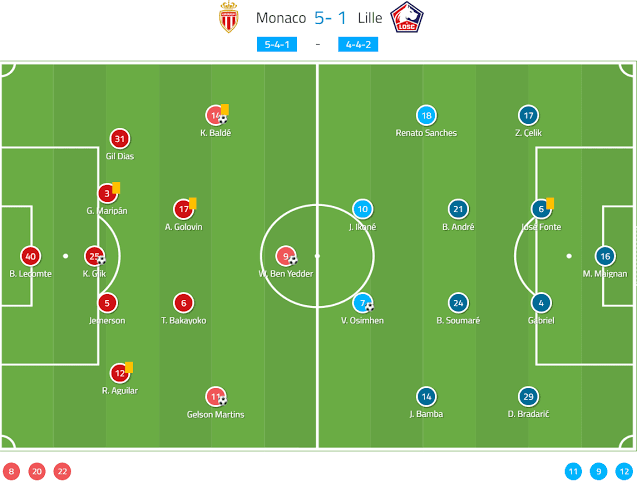
AS Monaco presented the most extreme high-scoring profile in the league due to a severe disparity between world-class attacking efficiency and disastrous defensive fragility. Under Leonardo Jardim and later Robert Moreno, Monaco fixtures consistently delivered significant goal volume at both ends of the pitch.
With prolific forwards supported by creative playmakers, Monaco routinely scored multiple goals per fixture. However, their inability to defend transitional moments or maintain defensive midfield cover resulted in one of the league’s worst defensive records, creating ideal conditions for Over 2.5 and Both Teams to Score outcomes.
| Club | Primary Tactical Setup | Offensive Generation Style | Defensive Vulnerability Level | Primary Total Market Lean |
| Paris Saint-Germain | Fluid 4-2-2-2 / 4-3-3 | Elite individual skill & positional overloads | Moderate (transitional space behind fullbacks) | Over 3.5 Goals |
| AS Monaco | High-tempo 4-3-3 / 3-5-2 | Rapid vertical attacks & crossing volume | Very High (unstable rest defense) | Over 2.5 / 3.0 Goals |
| Olympique Lyonnais | Possession 4-3-3 / 4-2-3-1 | Central combination play & wing penetration | Moderate to High (defensive inconsistencies) | Selective Over 2.5 Goals |
| Olympique de Marseille | Disciplined 4-3-3 Mid-Block | Patient buildup & set-piece efficiency | Low to Moderate (compact defensive lines) | Under 2.5 Goals |
The comparison detailed above illustrates that nominal club stature does not automatically translate into high match totals. Monaco and PSG consistently drove elevated scorelines through distinct mechanisms—pure firepower versus systemic imbalance—whereas Marseille achieved an elite league position while suppressing total goal events.
Tactical Triggers That Accelerate Goal Frequency
Certain specific tactical matchups systematically produce elevated goal outputs regardless of the nominal pre-match baseline. Recognizing these triggers enables analysts to anticipate high-scoring contests before market lines fully adjust.
- Aggressive Press Against Build-Up Errors: High-pressing systems forcing immediate turnovers inside the defensive third generate high-probability shooting chances.
- Overextended Wingbacks: Systems using dynamic wingbacks leave vast lateral spaces for counter-attacking exploitation.
- Early Deficits for Heavy Favorites: An early goal conceded by an elite side forces an aggressive tactical shift that leaves massive defensive voids.
- Set-Piece Efficiency Against Zonal Defenses: Teams proficient in delivery exploiting opponents with poor aerial marking inside the six-yard box.
Identifying these tactical combinations provides a clearer forecast of goal production than broad historical averages. When two teams with open defensive systems collide, the probability of exceeding standard total thresholds increases substantially.
Navigating sports handicapping requires intense focus on tactical match dynamics, which contrasts sharply with games that rely entirely on independent probability mechanics. Whenever a player chooses to engage with a digital casino online, they interact with mathematical house edges and random number generators, whereas football totals markets reward deep tactical deconstruction of real-world coaching strategies and athletic matchups.
Why Style Comparisons Fail in Truncated Circumstances
The premature ending of the 2019/20 season after 28 matchdays highlighted how external variables can disrupt stylistic projections. Tactical models assume that underlying expected goals will eventually align with actual outcomes over a full 38-game schedule.
In a shortened sample, cold finishing runs or anomalous goalkeeping displays have a disproportionate impact on aggregate data. Bettors who based their projections strictly on tactical theory without factoring in short-term finishing variance occasionally suffered when dominant attacking teams experienced localized slumps in front of goal.
Summary
Anticipating high-scoring fixtures among top 2019/20 Ligue 1 teams required analyzing how conflicting tactical setups interacted on the pitch. Paris Saint-Germain’s overwhelming firepower and AS Monaco’s severe defensive vulnerabilities consistently drove match totals upward, while Olympique de Marseille demonstrated that high-ranking clubs can thrive on narrow, low-scoring margins. Long-term accuracy in total goal markets stems from deconstructing specific tactical mechanisms—such as transition vulnerability, pressing intensity, and rest defense—rather than relying on overall club prestige.