
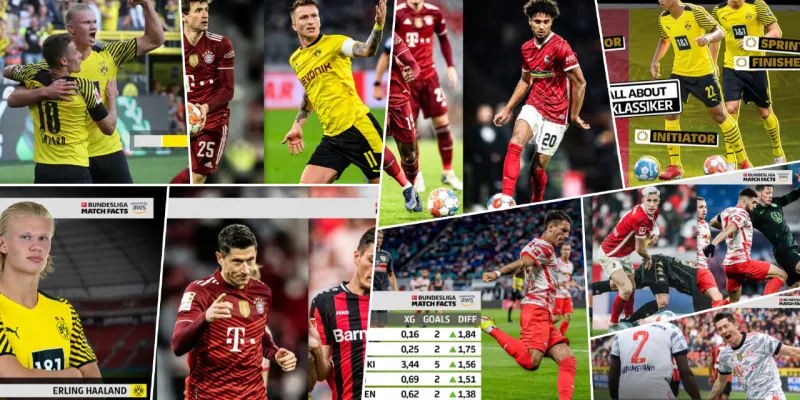
The 2021/2022 Bundesliga season featured distinct tactical identities among the league’s strongest clubs, and these playing styles directly influenced how often their matches produced high goal totals. Bayern Munich, Borussia Dortmund, and RB Leipzig each approached attacking and defensive organisation differently, creating matchups where the likelihood of over 2.5 or 3.5 goals varied dramatically depending on opponent and context. For bettors focusing on goal markets, understanding how top-team styles interacted with the broader league landscape turned abstract tactical knowledge into practical betting edges across 34 matchdays.
Why Playing Style Matters For Goal-Total Betting
A team’s tactical setup determines the volume and quality of chances created and conceded, which in turn shapes the distribution of scorelines over a full season. High-pressing, possession-dominant sides tend to generate more shots and higher xG, raising the baseline for total goals when they face opponents willing to engage, while counter-attacking teams may produce lower shot counts but create volatile, transition-heavy games. In the 2021/2022 Bundesliga, recognising these stylistic signatures ahead of kick-off helped bettors anticipate whether a fixture would lean toward a high-tempo shootout or a cagier, low-event affair.
Bayern Munich’s Dominance And Open-Play Goal Output
Bayern Munich finished the 2021/2022 season as champions for the tenth consecutive time, underpinned by the highest open-play expected goals total among all top-five European league teams that year. Their relentless attacking structure, built around high possession, wide overloads, and clinical finishing from players like Robert Lewandowski, meant that most Bayern matches featured significant goal volume regardless of opponent strength. Because Bayern consistently forced opponents to defend deep or risk being overrun in transition, their fixtures regularly crossed common over/under thresholds, making total-goals markets a natural focus for anyone tracking their form.
Lewandowski led the league with 35 goals across 34 matches, and Bayern’s system ensured that chances flowed from multiple sources—wide combinations, set pieces, and counter-pressing turnovers—which reduced reliance on any single player and kept goal output stable even when key attackers rested. For bettors, this consistency meant that Bayern home games against mid-table or weaker sides offered reliable high-scoring potential, while away fixtures against top opponents introduced more variance due to opposition quality and tactical adjustments.
Borussia Dortmund’s Transition Speed And Defensive Fragility
Dortmund finished second in 2021/2022, playing a high-energy, transition-focused style that prioritised vertical attacks and quick combinations in the final third. With Erling Haaland and pace-driven wingers, Dortmund could punish opponents in open play, but their defensive organisation often left gaps that allowed counter-attacks and set-piece goals, resulting in matches where both teams scored freely. This combination—potent attack, vulnerable defence—made Dortmund fixtures attractive candidates for over bets, especially in away matches where they committed more players forward and conceded space behind.
The clearest illustration of this dynamic came in high-profile clashes where Dortmund’s willingness to press high and commit bodies forward created end-to-end spectacles, exemplified by their 1–4 home defeat to Leipzig in which defensive mistakes and transition speed dominated the narrative. For goal-market bettors, tracking Dortmund’s defensive metrics—clean-sheet rate, goals conceded per match, xG against—alongside their attacking output provided a framework for identifying fixtures likely to exceed standard totals.
RB Leipzig’s Pressing Intensity And Tactical Flexibility
RB Leipzig combined aggressive counter-pressing with the ability to control possession, making their matches less predictable in terms of goal totals than Bayern’s or Dortmund’s. Under their 2021/2022 management, Leipzig could dominate weaker sides with sustained pressure or sit deeper against elite opponents and strike on the break, meaning that fixture context and opponent style heavily influenced scoring patterns. Their forward line, led by Christopher Nkunku, contributed significant goals and assists, but Leipzig’s defensive solidity relative to Dortmund meant fewer wild scorelines unless they faced another attack-heavy team.
Matches between Leipzig and other top clubs—such as their 4–1 victory over Bayern or their 4–1 win at Dortmund—showcased how tactical adjustments and in-game momentum shifts could turn matches into high-scoring affairs when Leipzig’s press forced turnovers in dangerous areas. For bettors, Leipzig fixtures required closer inspection of opponent form and tactical setup rather than blanket over bets, because their style adapted more than Bayern’s or Dortmund’s rigid approaches.
Tactical Drivers Of High-Scoring Outcomes
Different playing styles create distinct pathways to high goal totals, and recognising these mechanisms helps bettors move beyond surface-level “attacking team = over bet” logic. The table below summarises how Bayern, Dortmund, and Leipzig’s 2021/2022 tactical identities influenced the likelihood of high-scoring matches.
| Team | Primary tactical style | Defensive vulnerability | Typical high-scoring scenario |
| Bayern Munich | High possession, wide overloads, relentless xG | Low, but exposed in rare high-line mistakes | Home vs mid-table or lower; big European games |
| Borussia Dortmund | Vertical transitions, pace-driven attack | Moderate to high, gaps on counter-attacks | Away vs pressing teams; home vs other attackers |
| RB Leipzig | Counter-press + possession flexibility | Low to moderate, tactical-dependent | Big matches vs top sides when press forces turnovers |
Understanding these patterns allowed 2021/2022 bettors to differentiate between fixtures where high totals were structurally likely—such as Dortmund away—and those where over bets required specific conditions, like Leipzig facing another press-heavy opponent. This granularity turned tactical observation into a repeatable betting framework rather than a one-off hunch.
How Mid-Table And Lower Teams Responded To Top-Side Styles
The interaction between elite-team styles and mid-table or relegation-threatened opponents shaped many 2021/2022 Bundesliga over/under outcomes. Teams facing Bayern often accepted deep defensive blocks to limit space, which paradoxically sometimes lowered goal totals despite Bayern’s dominance if the opponent successfully parked and Bayern lacked finishing sharpness. Conversely, mid-table sides with attacking ambition—such as Freiburg or Hoffenheim—could produce open, high-event games against Dortmund or Leipzig by refusing to sit deep and instead pressing aggressively themselves.
Lower-table teams in relegation battles tended to play conservatively at home but took more risks away, creating asymmetric goal potential depending on venue. For bettors, this meant that a Bayern away fixture at a struggling side might still go under if the opponent defended compactly and Bayern rotated key attackers, whereas the same opponent hosting Dortmund could produce goals if they pushed for points and left space behind.
Schedule Context And Fixture Congestion Effects
Beyond individual playing styles, the 2021/2022 Bundesliga calendar introduced periods of fixture congestion around European commitments and domestic cup rounds, which impacted how top teams approached league matches. Bayern, Dortmund, and Leipzig all competed in European tournaments, leading to rotation and tactical caution in certain league fixtures sandwiched between continental ties. Bettors who tracked European schedules could identify Bundesliga matches where top sides fielded weakened lineups or managed intensity, often resulting in lower scoring or unexpected defensive solidity from nominally attacking teams.
Conversely, matches immediately after international breaks sometimes saw rusty defending and disjointed pressing, increasing goal totals as teams took time to regain rhythm. Combining knowledge of playing styles with awareness of these schedule effects refined goal-market predictions, separating situations where tactical identity dominated from those where external factors disrupted normal patterns.
Using Stats Apps And Historical Data To Support Style Analysis
Bettors aiming to turn tactical observations into systematic bets during 2021/2022 benefited from cross-referencing match-level stats—shots, xG, possession, pressing metrics—against qualitative style descriptions. Apps that tracked expected goals for and against, along with defensive actions and transition speed, made it easier to quantify how aggressively a team played and whether their results aligned with underlying process. For example, a team consistently outperforming its xG might see regression in future matches, lowering expected goal totals, whereas a side underperforming xG could rebound and push totals higher once finishing luck normalised.
Historical head-to-head data also revealed whether specific matchups reliably produced high scoring independent of broader style trends, such as Bayern–Dortmund or Leipzig–Leverkusen clashes that became known for open, transition-heavy football. Combining these historical patterns with live-season stats created a layered view that balanced tactical theory with empirical outcomes.
Choosing Markets And Operators For Style-Based Goal Betting
Once a bettor identifies a Bundesliga fixture likely to produce high scoring based on playing-style analysis, execution depends on finding competitive lines and suitable market options. Different operators price over/under markets with varying margins and offer different threshold options—2.5, 3.5, or team-specific totals—which can significantly affect expected value when odds differ by even 5–10%. For someone building a strategy around top-team styles in 2021/2022, comparing goal-line pricing across multiple sources became part of the pre-match routine rather than an afterthought.
In situations where a bettor values access to detailed Bundesliga markets with flexible goal thresholds, evaluating a betting interface such as ufabet means checking not only whether over/under 2.5 is offered but also whether Asian total lines, team totals, and half-time/full-time goal markets are available at competitive prices relative to broader market consensus, because these secondary options can offer sharper entry points when the main line feels overbet or poorly priced.
Avoiding Overconfidence And Recognising When Styles Neutralise
A common mistake when betting on playing-style matchups is assuming that “attacking team + attacking opponent = automatic over,” without considering how tactical adjustments neutralise tendencies. In 2021/2022, some high-profile Bundesliga clashes between top teams produced cagier, lower-scoring affairs when both managers prioritised defensive stability early, only opening up late if one side conceded first. Similarly, weather conditions, referee tendencies, and key absences could disrupt the normal flow of a team’s style, making pre-match expectations unreliable if not updated with late information.
Disciplined bettors using style analysis accepted that not every Bayern or Dortmund match would hit the over, and that variance around tactical execution and finishing luck meant individual results could diverge sharply from probabilistic expectations. Tracking results across the season and comparing hit rates for different style-based bets revealed which patterns held up and which were just compelling narratives unsupported by long-run data.
Keeping Goal-Market Bets Separate From Other Gambling
For bettors who focus heavily on tactical and statistical analysis of Bundesliga goal markets, maintaining that disciplined mindset requires clear separation from other, higher-variance gambling activities. When football research and style-based bets are mixed with impulsive, entertainment-driven games, the careful logic that underpins over/under strategies can be eroded by emotional swings from unrelated losses or wins. Keeping separate mental and financial boundaries ensures that insights into Bayern’s pressing or Dortmund’s transitions translate into measured stakes rather than being distorted by mood shifts from elsewhere.
In practice, if a bettor occasionally explores non-football options available through a broader hub that includes a casino online area, clarity about budget and decision-making rules means that any movement between those activities is planned and rare, preventing high-volatility games from dictating the stake sizes or market selections applied to carefully researched Bundesliga goal bets. This separation preserves the analytical character of style-based betting and protects the bankroll from contamination by unrelated variance.
Summary
Comparing the 2021/2022 Bundesliga playing styles of Bayern Munich, Borussia Dortmund, and RB Leipzig reveals clear tactical pathways to high-scoring matches, driven by attacking intensity, defensive vulnerability, and opponent interaction. By understanding how each top team’s style influenced goal totals, tracking schedule context, and using stats apps to validate tactical observations, bettors could identify over/under opportunities that went beyond surface-level “big team = goals” assumptions. When combined with disciplined execution, competitive line-shopping, and separation from other gambling activities, this style-focused approach turned tactical knowledge into a structured, repeatable method for Bundesliga goal-market betting.